Solar Panels and Storm Damage: What to Do When Your Roof and Solar Are Both Damaged
Solar Panels and Storm Damage: What to Do When Your Roof and Solar Are Both Damaged
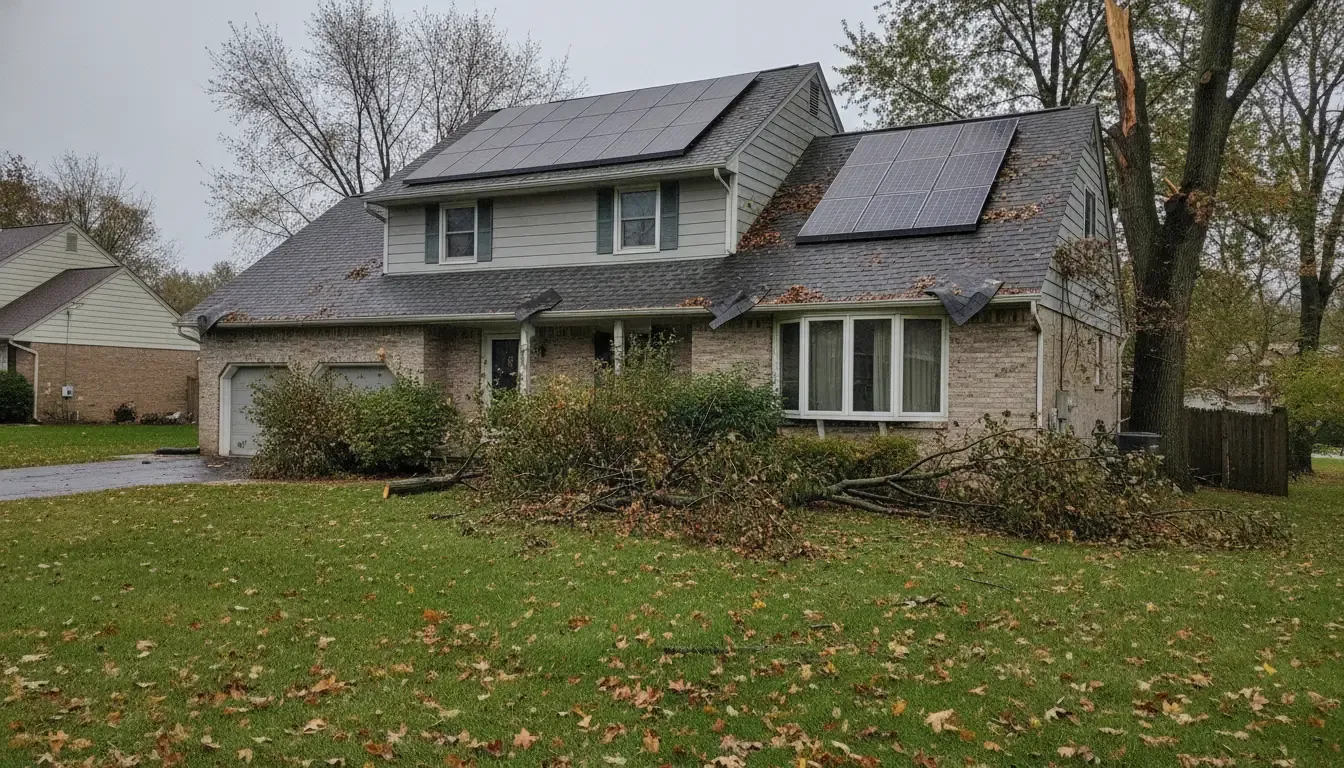
A severe storm can damage shingles, flashing, gutters, and the solar array on the same home. For New Jersey homeowners, the safest response is to document the condition, avoid climbing onto the roof, and coordinate the roof and solar work before repairs begin. Our storm damage roof repair guide for New Jersey homeowners explains the first steps. This article focuses on solar panel removal and reinstall after storm damage, including insurance questions and contractor selection.
When a storm damages both a roof and solar panels, the repair plan must account for the roof system and the array together. A roofing contractor should inspect the roof structure and weatherproofing, while the solar system should be evaluated for panel, racking, wiring, and inverter concerns. Treating either system as an afterthought can delay the project or create avoidable risk.
Request a free roof estimate and get a clear next step for storm damage affecting your roof and solar array.
Can hail or wind damage solar panels along with your roof?
Yes. Hail can crack or chip a panel, while high winds, falling branches, and debris can damage racking, exposed wiring, flashing, and roof shingles. Some damage is visible immediately, but electrical or mounting problems may not be obvious from the ground. A coordinated inspection helps identify conditions that need attention before anyone disturbs the array.
- Look for cracked glass, visible chips, or unusual marks on the panels.
- Watch for shifted panels, bent racking, loose hardware, or exposed wiring.
- Check ceilings and attic areas for water stains or active leaks.
- Photograph fallen branches, damaged shingles, gutters, and exterior impact points from ground level.
- Do not walk on the roof, touch damaged wiring, or attempt to move a panel yourself.
If the home has an active leak, use a temporary measure recommended by a qualified professional and keep people away from unsafe areas. Do not assume that an array is safe to handle simply because the panels still appear to produce power. Electrical equipment can remain energized in daylight.
Does homeowners insurance cover storm damage to solar panels?
Coverage depends on the policy, the cause of loss, exclusions, deductibles, and how the solar equipment is classified. Many homeowners policies may address covered storm damage to permanently installed equipment, but homeowners should confirm the details with their insurer rather than assume that every panel, mount, wire, or related cost is included.
Before filing or discussing a claim, gather the policy information, storm date, photos, inspection findings, invoices, and any available solar installation records. Ask the insurer how it wants the roof and solar portions documented. Keep copies of all communications, and do not authorize a full replacement based only on an early visual estimate.
| Area to document | Questions to ask |
|---|---|
| Roof surface | Are shingles, flashing, vents, decking, or underlayment damaged? |
| Solar equipment | Are panels, racking, wiring, inverter, or attachments affected? |
| Water intrusion | Where did water enter, and what temporary protection is needed? |
| Work sequence | Which contractor coordinates removal, roof work, and reinstall? |
| Claim records | Which photos, reports, estimates, and receipts does the insurer require? |
An experienced storm-damage contractor can help organize roof findings and provide clear documentation, but the insurer determines coverage under the policy. A contractor should not promise claim approval or tell you to exaggerate damage.
Why does contractor experience matter for solar roof storm damage?
Roofing beneath solar panels requires more coordination than a standard roof repair. The team must protect the array, preserve the roof's weather barrier, plan around mounting points, and maintain a safe handoff with the solar provider or qualified electrical professional when system-specific work is required. Experience reduces the chance that a rushed repair creates a new leak or leaves equipment improperly secured.
Ask each contractor:
- Who will coordinate solar panel removal and reinstall after storm damage?
- How will the panels, racking, wiring, and inverter be protected during roof work?
- Will the roof inspection include flashing and penetrations below the array?
- How will the project document existing damage before work starts?
- What happens if hidden roof damage is found after the array is removed?
- Which parts of the work are performed by the roofing team, and which require the solar installer or electrical professional?
- How will the completed roof and reinstalled array be inspected before closeout?
SunForce Roofing serves homeowners in New Jersey and Pennsylvania with storm damage repair, roof replacement, drone inspections, and solar removal and reinstall. The company is a GAF Master Elite contractor and uses drone-based assessments where appropriate to document hard-to-see roof conditions. Ask for a written scope that separates roof work from solar coordination.
Get storm damage help from SunForce Roofing with a focused inspection and a repair plan for your home.
What does solar panel removal and reinstall after storm damage involve?
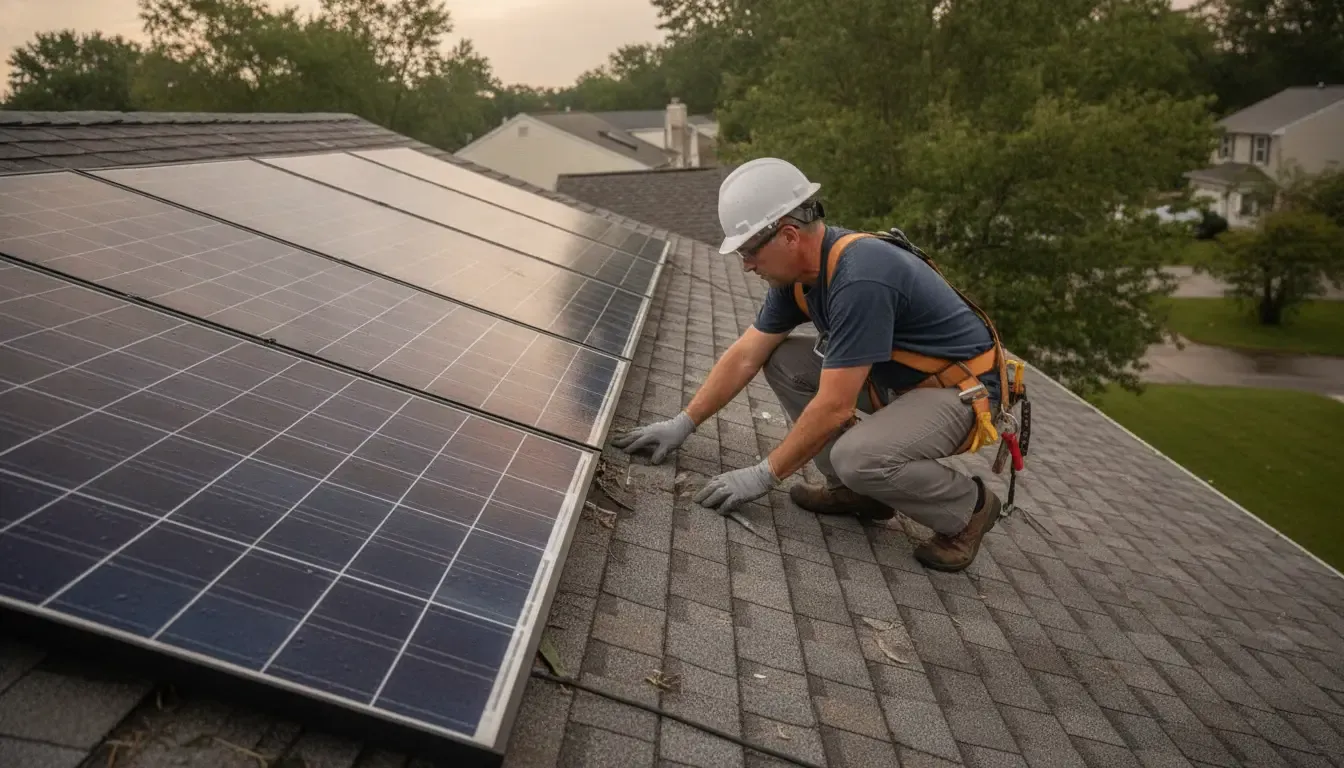
Solar panel removal and reinstall after storm damage should be planned as part of the roof project, not added after the roofing scope is complete. The sequence typically starts with documentation and system coordination, continues with careful removal and roof repairs, and ends with secure reinstallation and a final check of the roof and array.
- Inspect and document: Record roof, panel, racking, wiring, and interior damage before equipment is moved.
- Confirm responsibilities: Establish who handles the array, electrical connections, roof penetrations, permits if applicable, and final system checks.
- Remove the array safely: Protect panels and label or document components so they can be returned to the correct locations.
- Repair or replace the roof: Address the roof deck, underlayment, flashing, shingles, and mounting areas according to the approved scope.
- Reinstall and inspect: Secure the array, review penetrations and weatherproofing, and coordinate any needed system testing.
The exact sequence varies by array design, roof condition, equipment, and local requirements. A homeowner should receive a written scope before work begins. It should identify what is being removed, what is being repaired, who is responsible for each step, and what evidence will be provided at completion.
How can New Jersey homeowners plan the repair?
A practical repair plan connects the storm evidence, insurance process, roof scope, and solar coordination. Homeowners should start with a safety check and ground-level photos, then arrange a professional inspection. If the roof needs replacement, the solar removal schedule should be confirmed before materials arrive and before any roof work begins.
SunForce's storm damage service includes roof assessments and drone documentation where needed. The company also provides roof replacement and roof repair for homeowners in its service area. For the broader insurance and storm-damage process, use the New Jersey storm damage roof repair guide as a companion resource.
Choose the contractor based on the quality of the scope, communication, documentation, and coordination plan, not only on the first estimate. A clear process protects the roof investment and helps prevent delays when roof and solar work overlap.
What should you ask before hiring a storm-damage roofing contractor?
Before signing a contract, confirm that the contractor understands the interaction between the roof and the solar array. The right questions clarify responsibility, timing, documentation, and the steps used to protect the home during removal and reinstall.
- Have you completed roof work that required solar removal and reinstall?
- Who will inspect the roof beneath the panels?
- How will you document the condition of the roof and array before work?
- Who coordinates with the solar company if system-specific work is needed?
- What roof repairs are included, and how are hidden conditions handled?
- What documentation will I receive for my insurer?
- How will you verify that the finished roof is sealed around mounting points?
- What is the expected order of inspection, removal, roofing, reinstall, and final review?
Look for a contractor that gives direct answers, explains limits clearly, and provides a written scope. Avoid anyone who asks you to sign before inspecting the roof, guarantees an insurance result, or treats solar equipment as unrelated to the roof work.
Schedule a free roof inspection to discuss storm damage, roof repairs, and solar coordination with SunForce Roofing.
Solar storm damage FAQ
Can I inspect storm damage around my solar panels myself?
You can photograph visible conditions from the ground, but do not climb onto the roof or touch panels, wiring, or mounts. A qualified inspection can evaluate areas that are unsafe or impossible to see from the ground.
Should solar panels be removed before repairing a damaged roof?
If the roof work is beneath or near the array, removal may be necessary to access the roof and properly repair penetrations. The scope depends on the roof layout, mounting system, and damage. Confirm the sequence with the roofing and solar professionals before work starts.
Will a roof inspection show whether solar panels still work?
A roof inspection can document visible roof and mounting conditions, but it does not replace a system-specific solar or electrical evaluation. If the array may be damaged, ask the appropriate professional to evaluate its components and operation.
How should I prepare for an insurance claim involving roof and solar damage?
Keep ground-level photos, the storm date, inspection reports, installation records, estimates, and receipts. Ask your insurer which documents it requires and keep roof and solar findings organized so the claim file is complete.
Does SunForce Roofing inspect solar panels?
SunForce Roofing provides storm damage roof inspections, drone assessments where appropriate, roof repair, roof replacement, and solar removal and reinstall coordination. Ask the team to explain which roof and solar steps are included in the proposed scope.


