What to Know: Architectural Shingles vs 3-Tab Shingles NJ
Choosing between architectural and 3-tab shingles affects how a New Jersey roof looks, how it is installed, and what you should compare in a proposal. This guide to architectural shingles vs 3 tab shingles nj explains the practical differences so you can assess the options for your home without treating one style as right for every roof.
Call SunForce Roofing to discuss your roof
Architectural Shingles vs 3-Tab Shingles in NJ: What Is the Difference?
Both are asphalt shingles, but their construction and appearance differ. A 3-tab shingle is a single, relatively flat strip with regularly spaced cutouts that create three visible tabs. Architectural shingles, also called dimensional or laminate shingles, use a heavier base and layered sections that create a more varied surface.
That construction changes the look and can affect the product’s published performance ratings, weight, installation details, and price. The exact difference depends on the manufacturer and product line. An architectural shingle is not automatically a better fit for every homeowner, and “3-tab” or “architectural” alone is not enough information to compare two bids.
The U.S. Forest Service overview of roofing materials describes architectural shingles as having a heavier base mat with additional mats or sections, and notes their increased weight and durability compared with traditional three-tab shingles. That is a useful general distinction, but it is not a substitute for comparing the specifications of the products being proposed for your home.
For a homeowner, the useful takeaway is simple: compare named products, not category labels. Ask for the manufacturer, product line, color, and written product documentation. Then look at how those shingles fit into the complete roof replacement plan, including the underlayment, flashing, edge details, and installation scope.
Architectural Shingles vs 3-Tab Shingles in NJ: How Do They Compare?
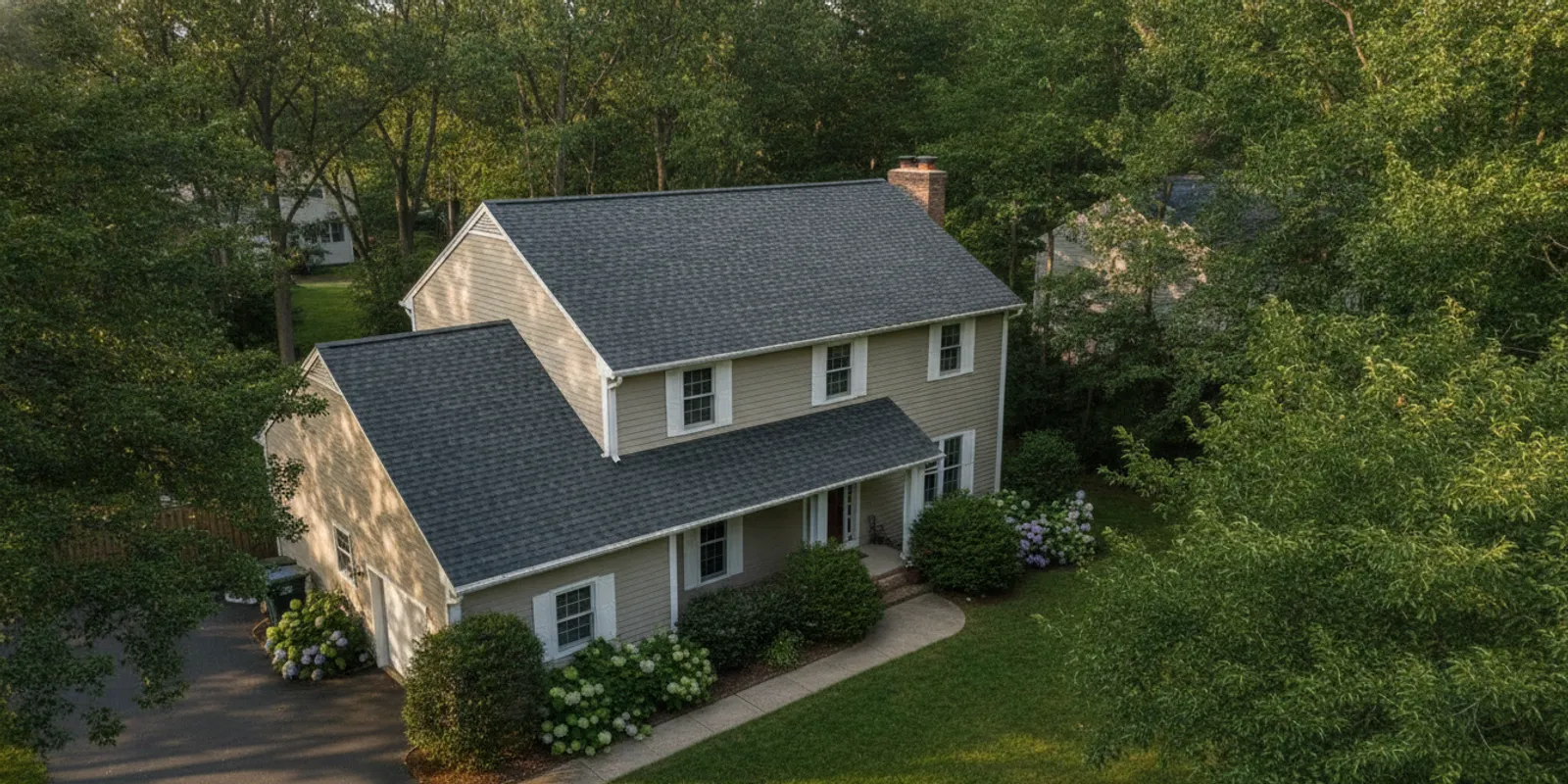
Three-tab shingles create a flatter, more uniform pattern. The repeated rectangular tabs give a roof a regular, orderly appearance. Architectural shingles have more depth and variation because their laminated sections create shadows and a less uniform pattern. Depending on the product, color, and roof shape, that can make the roof look more textured.
Consider the whole exterior before choosing. Look at your siding, trim, brick or stone, and the color of nearby homes. A sample viewed in a showroom or on a screen may look different across a full roof in daylight. If you can, review a physical sample outside and view it from the street. Confirm the product name and color on the written estimate so the selection is clear.
Roof shape matters, too. A simple roof with broad slopes may show a large, uninterrupted shingle field. On a roof with dormers, valleys, or multiple sections, shadows and color variation may stand out differently. Neither pattern changes the roof’s basic function on its own; the quality of the complete roofing system and the installation remain important.
Think about how visible the roof is from the street and which parts of the home draw the eye. A strongly varied color blend can be prominent on a broad slope, while a more uniform shade can create a quieter finish. Samples help you judge color and texture, but they cannot tell you whether the product is appropriate for your roof. Use them to make the appearance decision after confirming product specifications and scope.
Which shingles are more durable?
Architectural shingles are generally heavier and more substantial in construction than standard 3-tab shingles. That difference can contribute to stronger product performance, but it does not establish a universal lifespan or mean every architectural product outperforms every 3-tab product in every condition. Product design, installation, ventilation, roof slope, and exposure all matter.
Check the data for the exact shingle under consideration. Manufacturers publish product-specific information, including wind ratings, installation instructions, warranty terms, and any conditions attached to those ratings. Compare equivalent product details rather than relying on a broad label. A roof’s performance also depends on more than the visible shingle: underlayment, flashing, edge details, ventilation, and workmanship are part of the installation.
The National Institute of Standards and Technology research on long-term asphalt shingle durability examines durability characteristics of asphalt shingle roof covers. The study is a reminder to evaluate material performance through product and system details rather than assuming that appearance or category alone tells the whole story. It does not provide a single lifespan that applies to every shingle or New Jersey roof.
Durability is not one number. A product’s published coverage, wind classification, and installation conditions answer different questions. Read the documents for the precise product being proposed, and ask the contractor to explain any conditions that affect the rating or coverage. Avoid treating a broad warranty name or shingle category as a substitute for the actual terms.
The roof underneath matters as well. If the deck has damaged areas, if flashing needs attention, or if ventilation components are part of the project, those details belong in the work plan. When considering a residential roof replacement, ask for the full scope in writing so you can see how the shingle choice relates to the rest of the assembly.
How should New Jersey homeowners compare wind performance?
Do not assume a shingle type has one wind rating across all brands. Ratings and installation requirements can vary by product. Ask for the manufacturer and full product name, then compare the published rating and the installation instructions for that specific product. The proposal should make clear which shingles are included, not just say “architectural” or “three-tab.”
Wind performance depends on proper installation as well as the shingle itself. The installer must follow the product’s required fastening pattern and other instructions. Roof geometry, edge details, and the condition of the roof deck may also affect the work needed. Ask how the estimate addresses these details and whether any deck repairs are excluded or priced separately.
New Jersey homes experience a range of weather, but local conditions do not make one style an automatic choice. Focus on the manufacturer’s specifications for the proposed product and on whether the installation plan follows them. If your home has particular exposure, an unusual roof pitch, or a history of wind-related issues, ask the contractor to explain how those factors affect the recommendation.
When you compare proposals, check whether the stated rating applies to the exact product and the installation configuration being offered. If a rating depends on a particular fastening method or other conditions, those requirements should be followed and explained. A verbal statement that one category is “wind rated” is not enough to make a useful comparison.
If you are dealing with a leak or a limited area of visible damage rather than planning a full replacement, the next step may be an assessment of the existing roof. A roof repair evaluation can help determine whether a repair is appropriate; shingle style alone cannot establish the source or extent of a problem.
What changes during installation?
The basic job steps are similar for both styles: remove or prepare the existing roof as specified, inspect the roof deck, install the required components, and place the shingles according to the product instructions. However, the specific layout and fastening details can differ. The crew should follow the selected product’s instructions rather than treating all asphalt shingles as interchangeable.
Architectural shingles are typically heavier than standard 3-tab shingles. Before work begins, the contractor should account for the roof’s condition and the materials required by the selected system. If an estimate includes multiple layers of existing shingles, damaged decking, or unusual flashing details, ask how those items will be handled. Do not assume that a basic shingle selection resolves questions about the deck or other roof components.
For either style, a clear estimate should identify the shingle product, describe the scope of tear-off or preparation, and explain which supporting components are included. It should also note how the contractor will address concealed conditions if they are found once work is underway. Written details make it easier to compare proposals fairly.
Ask what happens if the roof deck needs repairs after the existing material is removed. The proposal should explain how added work is identified, communicated, and approved. This is different from choosing a shingle and is a project-scope question that deserves a clear answer before work begins.
Likewise, clarify whether old roofing is being removed, what underlayment and flashing work are included, and how cleanup and disposal are addressed. These components may not be visible once the project is complete, but they affect what the estimate covers. Comparing two bids without aligning these details can make the lower or higher number misleading.
Talk with SunForce Roofing about shingle options
How do architectural and 3-tab shingles compare?
| Comparison point | 3-tab shingles | Architectural shingles |
|---|---|---|
| Construction | Typically a single, flatter strip with three visible tabs | Typically a heavier base with layered or laminated sections |
| Roof appearance | Regular, flat, uniform pattern | More dimensional surface and visual variation |
| Product weight | Generally lighter than architectural shingles | Generally heavier; verify the exact product specifications |
| Wind performance | Varies by product and installation | Varies by product and installation; compare published ratings |
| Installation | Follow the specific product’s layout and fastening instructions | Follow the specific product’s layout and fastening instructions |
| Cost comparison | May have a lower material cost, depending on product and availability | May cost more; compare complete written estimates |
| Best comparison method | Confirm brand, product name, rating, and included components | Confirm brand, product name, rating, and included components |
The table describes common distinctions, not guarantees for every product. Ask the contractor to identify the actual shingle and include the relevant specifications in the proposal. A direct comparison is only useful when the scope and supporting materials are also clear.
How should you compare the value and cost?
Price depends on more than shingle style. Roof size and shape, the number of existing layers, tear-off requirements, access, deck condition, flashing work, ventilation, and the selected product all affect the scope. Two estimates can use the same shingle category and still describe different work.
When reviewing a quote, check for:
- The manufacturer, product line, and color of the shingles.
- The quantity of existing roofing to be removed, if applicable.
- Underlayment, flashing, drip edge, ridge details, and ventilation items included in the scope.
- How damaged roof decking or concealed conditions will be handled.
- Product-specific wind information and installation requirements.
- Cleanup and disposal details, along with any items excluded from the estimate.
- Applicable warranty documents and the conditions that apply to them.
Compare the full scope, not just the shingle line or bottom-line number. If one proposal lists specific components and another uses broad phrases, ask both contractors to clarify the same points. That creates a more useful comparison and helps you understand what work is actually planned.
Value also includes appearance and your priorities for the home. A homeowner who prefers a flat, uniform roof may reasonably favor a 3-tab pattern when a suitable product is available. Someone who wants more dimension may prefer architectural shingles. Weigh those preferences alongside the documented product details and the full installation scope.
For a practical side-by-side review, request the same information from each contractor. Use the roof estimate process to clarify what is included and compare the products and project work in writing. This keeps the decision focused on the roof you are buying, not just the name of the shingle style.
Do not assume that selecting a more substantial-looking shingle automatically provides better value. The value depends on the particular material, appropriate installation, scope, and your priorities. A complete quote should make it possible to understand what you are paying for without relying on a vague promise or a category name.
What should you ask before choosing a shingle?
A short set of specific questions can turn a broad recommendation into a decision you can evaluate. Ask the contractor to identify the proposed shingle by manufacturer and product line, then confirm the color and style. If a proposal only says “architectural shingles,” ask which product is included and whether there are alternative options. The name matters because product specifications are not identical across a category.
- What is the exact product? Request the manufacturer, line, color, and product documentation so you can compare the actual materials being offered.
- What rating applies to this product? Ask for the published wind rating and any installation conditions that accompany it. Do not rely on a general statement about a shingle type.
- What is included beyond the shingles? Have the contractor identify underlayment, flashing, edge details, ridge materials, ventilation work, tear-off, and disposal in the written scope.
- How are repairs to the roof deck handled? Find out how concealed damage will be documented and how any work outside the original scope will be discussed before it proceeds.
- What warranty documents apply? Review the actual terms and conditions for the selected product and installation. Avoid comparing broad warranty labels without checking eligibility, coverage, and exclusions.
These questions are useful whether you are reviewing one proposal or several. Give each contractor the same questions and compare the answers alongside the written scope. If the recommendations differ, ask what roof condition or product specification led to the difference. A clear explanation should connect the proposed work to your roof rather than rely on a sales phrase.
It can also help to separate your priorities into essentials and preferences. Product performance, correct installation, a complete scope, and a clear process belong in the essentials column. Color, surface texture, and the amount of visual dimension are preferences. You may care strongly about either category, but separating them can help keep a style choice from obscuring an important scope question.
Before approving work, read the proposal from top to bottom. Check that product descriptions match the option you selected, that the work areas are clear, and that exclusions are understandable. If a line item or term is unfamiliar, ask for a plain-language explanation in writing. A proposal that makes the materials and work understandable is easier to evaluate than one that leaves key details open.
A qualified contractor should be able to explain how the recommendation relates to your roof, identify the proposed product, and show how the scope addresses the work required. The goal is not to pick the most elaborate label; it is to understand the material and installation plan well enough to make an informed choice.
Call SunForce Roofing to request a roof estimate
Which shingle style makes sense for your home?
Start with your goals. If a simple, consistent look is important, view 3-tab samples on the house and confirm the product’s availability and specifications. If you want a more dimensional roof, compare architectural options by color, rating, installation instructions, and complete cost. Neither choice should be made from a label alone.
Then assess the roof itself. The existing roof’s condition, slope, deck, flashing, and ventilation can influence the project plan. A professional roof assessment can identify those conditions and help define an estimate. SunForce Roofing holds GAF Master Elite certification, and its roof assessments can help homeowners understand the work being proposed without pressure to select a particular style.
For a roof replacement, ask for a written proposal that identifies the exact product and explains the installation scope. If you are considering a repair rather than replacement, ask whether the existing shingles can be matched and whether the proposed work addresses the cause of the problem. The right next step depends on the roof’s condition, not solely on whether the visible shingles are architectural or 3-tab.
Homeowners looking for an overview of residential roofing work can also review the residential roofing services page. For a replacement-focused project, return to the roof replacement information and make sure the written proposal identifies the products and work being considered.
Frequently asked questions
Are architectural shingles always better than 3-tab shingles?
No. Architectural shingles are generally heavier and have a layered appearance, but the right option depends on the exact product, specifications, roof condition, installation, and homeowner priorities. Compare the products and scope rather than treating one category as universally best.
Can you install architectural shingles over 3-tab shingles?
Whether a new roof can be installed over an existing layer depends on the roof’s condition, local code requirements, and the manufacturer’s instructions. The existing deck and roof assembly also need to be evaluated. Ask a qualified contractor to inspect the roof and explain whether tear-off is included in the proposed work.
Do architectural shingles have a higher wind rating?
Not automatically. Wind ratings vary by product, and installation requirements affect performance. Ask for the full product name and its published rating, then confirm that the installation plan follows the manufacturer’s instructions.
Which style costs less?
Cost varies by product and project scope. Three-tab shingles may have a lower material cost in some comparisons, but roof size, tear-off, deck repairs, flashing, ventilation, and labor also affect the total. Review complete written estimates for the same scope before deciding.
For a New Jersey roof, compare the specific shingle, installation details, and complete project scope before choosing between architectural and 3-tab shingles.


